

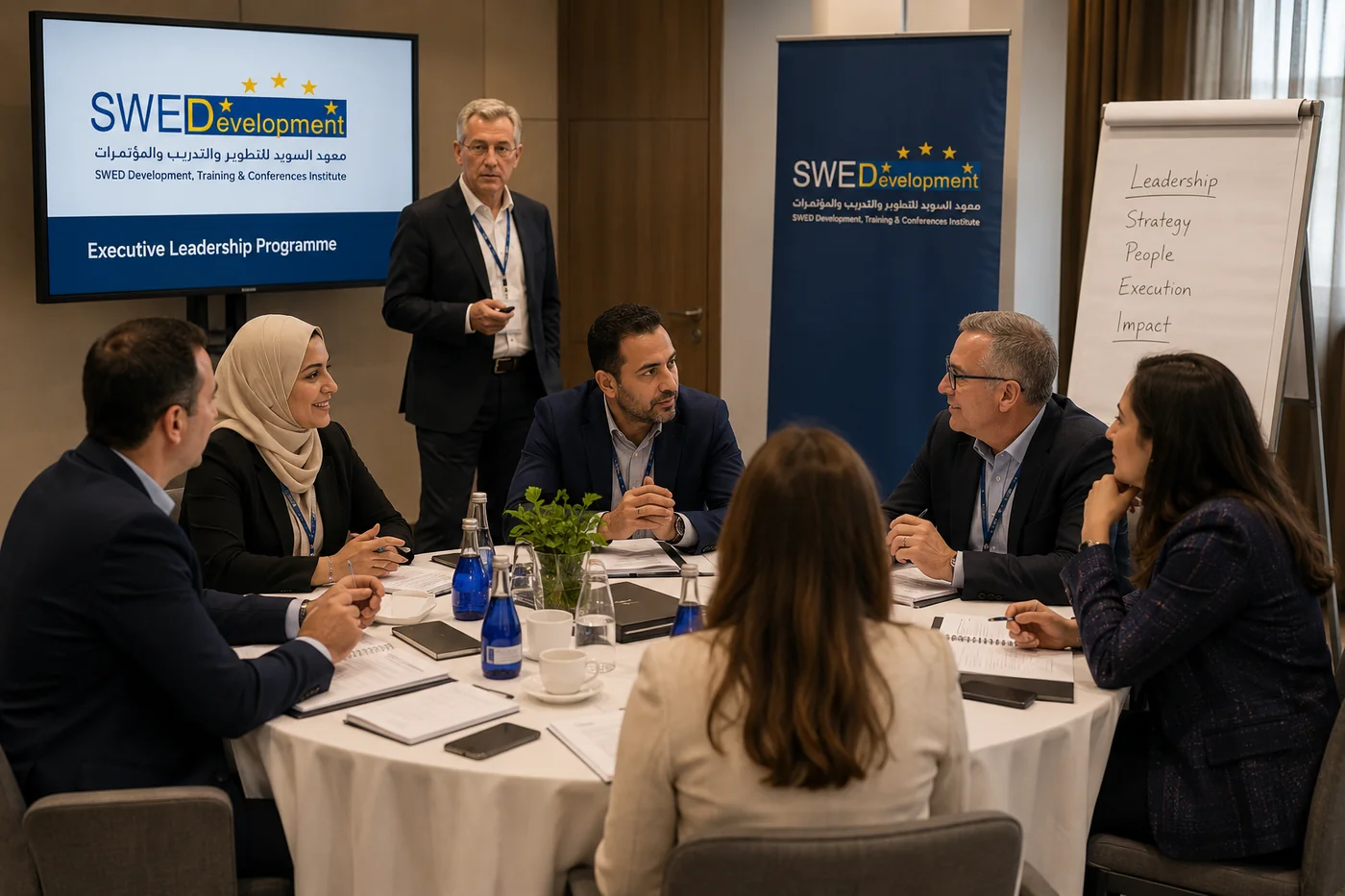
Governance and Institutional Performance Management
This programme examines how governance arrangements shape institutional performance management and how performance information should flow into oversight, accountability, and decision-making. Participants work through governance architecture, strategic alignment, indicator design, reporting discipline, review mechanisms, risk-informed performance dialogue, corrective action, and continuous institutional learning, producing practical internal frameworks and decision tools.
Governance and Institutional Performance Management
This programme examines how governance arrangements shape institutional performance management and how performance information should flow into oversight, accountability, and decision-making. Participants work through governance architecture, strategic alignment, indicator design, reporting discipline, review mechanisms, risk-informed performance dialogue, corrective action, and continuous institutional learning, producing practical internal frameworks and decision tools.
المدة
المدة عند الطلب
نمط التنفيذ
حضوري · عن بُعد
الإتاحة
المواعيد عند الطلب
لغة التنفيذ
العربية · الإنجليزية
المستوى
عند الطلب
نظرة عامة على البرنامج
This programme examines how governance arrangements shape institutional performance management and how performance information should flow into oversight, accountability, and decision-making. Participants work through governance architecture, strategic alignment, indicator design, reporting discipline, review mechanisms, risk-informed performance dialogue, corrective action, and continuous institutional learning, producing practical internal frameworks and decision tools.
الأهداف
قراءة البيئة المؤسسية وترجمتها إلى موقع استراتيجي واضح.
رسم اتجاه قابل للتنفيذ من قِبل الفرق التنفيذية دون الحاجة إلى إعادة تفسير مستمرة.
مواءمة الهيكل والحوكمة والكوادر خلف الأولويات المعلنة.
قيادة التغيير دون فقدان الاستقرار التشغيلي.
حوكمة التنفيذ عبر مؤشرات تعكس التقدّم المؤسسي الحقيقي.
المخرجات الرئيسية
4 مخرجات
لمن هذا البرنامج
6 فئات مستهدفة
محاور البرنامج
5 محاور
البرنامج اليومي
5 أيام
لغة التنفيذ والمواد
العربية أو الإنجليزية
معلومات عملية
المقر والمواد ولغة التنفيذ
المدة
خيارات التنفيذ
اختر نمط التنفيذ لاستلام المواعيد المؤكدة
لغة التنفيذ
العربية · الإنجليزية
افتراضي مباشر
بالعربية أو الإنجليزية · عند الطلب
نظرة عامة
الأهداف
المخرجات
لمن البرنامج
المحاور
البرنامج اليومي
المنهجية
التنفيذ
نظرة عامة على البرنامج
This programme examines how governance arrangements shape institutional performance management and how performance information should flow into oversight, accountability, and decision-making. Participants work through governance architecture, strategic alignment, indicator design, reporting discipline, review mechanisms, risk-informed performance dialogue, corrective action, and continuous institutional learning, producing practical internal frameworks and decision tools.
Examine the relationship between governance arrangements and institutional performance management.
Analyse governance architecture, mandates, roles, and decision rights across oversight and management levels.
Interpret strategic priorities into a coherent institutional performance framework.
Practise designing indicators, targets, ownership rules, and reporting definitions.
Assess data quality, validation, and reporting issues that affect management judgement and accountability.
Explore the structure and purpose of performance review forums, escalation paths, and accountability mechanisms.
Apply risk-informed analysis to performance variance, underperformance, and corrective action decisions.
Consider how lessons from review cycles can be converted into institutional learning and governance improvement.
قراءة البيئة المؤسسية وترجمتها إلى موقع استراتيجي واضح.
رسم اتجاه قابل للتنفيذ من قِبل الفرق التنفيذية دون الحاجة إلى إعادة تفسير مستمرة.
مواءمة الهيكل والحوكمة والكوادر خلف الأولويات المعلنة.
قيادة التغيير دون فقدان الاستقرار التشغيلي.
حوكمة التنفيذ عبر مؤشرات تعكس التقدّم المؤسسي الحقيقي.
Produce a governance and performance architecture map showing oversight bodies, management roles, and decision interfaces.
Define a decision-rights and accountability matrix for planning, reporting, review, and follow-up actions.
Develop a structured performance framework with aligned objectives, indicators, targets, and ownership assignments.
Draft indicator reference elements that improve consistency, comparability, and reporting discipline.
Specify data quality controls, validation responsibilities, and reporting workflows for performance information.
Structure a performance review forum model with agenda logic, escalation criteria, and follow-up tracking.
Prepare a corrective action register linking performance gaps, root causes, risks, owners, and review dates.
Set out a practical feedback loop for capturing lessons learned and improving governance and performance processes.
مسودة اتجاه استراتيجي خاص بمؤسسة المشارك.
إطار لترتيب الأولويات بين المتطلبات المؤسسية المتنافسة.
خطة لمواءمة أصحاب المصلحة خلال التسعين يوماً الأولى.
هيكل لوحة أداء مرتبطة بالنية الاستراتيجية.
لمن هذا البرنامج
Executive leaders with oversight of institutional performance and accountability.
Directors of governance, strategy, and performance.
Heads of planning and corporate performance.
Risk and compliance leaders involved in oversight and assurance.
Managers responsible for performance review, escalation, and corrective action.
محاور البرنامج
Governance architecture and institutional oversight design
Roles, committees, delegations, and decision rights
Strategic alignment and enterprise performance framework design
Indicator architecture, target-setting, and ownership logic
Data governance, quality assurance, and management reporting
Performance review forums, accountability, and escalation discipline
Risk-informed performance dialogue and corrective action management
Continuous institutional learning and governance refinement
البرنامج اليومي
Day 1 — Governance Architecture and Strategic Alignment: The purpose of governance in institutional performance management; Oversight structures, executive roles, and decision interfaces; Mandates, delegations, and accountability lines; Linking mission, strategy, and governance priorities to performance management design; Mapping current governance and performance responsibilities.
Day 2 — Performance Frameworks, Indicators, and Targets: Designing an enterprise performance framework aligned with strategic objectives; Selecting balanced indicators across outcomes, outputs, efficiency, quality, and compliance; Indicator definitions, baselines, thresholds, and target-setting logic; Assigning ownership for measures, analysis, and action; Common weaknesses in KPI design and how to address them.
Day 3 — Data Quality, Reporting, and Review Discipline: Data ownership, validation, and control points for performance information; Assessing completeness, consistency, timeliness, and reliability of reported data; Structuring dashboards and management reports for executive use; Designing review forums, reporting cycles, and escalation criteria; Building accountability into performance review processes.
Day 4 — Risk-Informed Performance Dialogue and Corrective Action: Using risk perspectives to interpret variance and emerging performance pressures; Distinguishing symptoms, root causes, and control weaknesses; Conducting constructive challenge in executive performance discussions; Developing corrective actions with owners, milestones, and monitoring rules; Escalating persistent underperformance through governance channels.
Day 5 — Institutional Learning and Integrated Application: Capturing lessons from review cycles and corrective action follow-through; Using governance feedback to refine indicators, reporting, and decision rights; Integrating governance, risk, and performance processes into a coherent management cycle; Preparing practical institutional outputs from the programme; Prioritising next-step improvements for sustained performance oversight.
منهجية التنفيذ
Governance-to-performance mapping to connect oversight structures with planning, reporting, and review responsibilities.
Decision-rights analysis to clarify who approves, challenges, escalates, and acts on performance information.
Performance framework design workshop using institutional objectives, measures, targets, and ownership rules.
Indicator definition clinic focused on relevance, balance, traceability, and reporting practicality.
Review of sample reporting packs to identify data weaknesses, ambiguity, and decision-usefulness gaps.
Simulation of a performance review forum to practise challenge, accountability, escalation, and action tracking.
Root-cause and corrective-action exercise linking underperformance to risks, controls, and management responses.
Institutional transfer planning to convert workshop outputs into governance documents, review routines, and improvement actions.
منهجية التنفيذ
خيارات التنفيذ
اختر نمط التنفيذ لاستلام المواعيد المؤكدة
تنفيذ داخل المؤسسة
في مقرّكم · أي مدينة
حضوري
أكثر من 125 مدينة · عند الطلب
افتراضي مباشر
بالعربية أو الإنجليزية · عند الطلب
زيارة مهنية
تُرتَّب عند الطلب · عند الطلب
نقاش تنفيذي ميسّر
تحليل حالات مؤسسية
ورش تخطيط تطبيقية
تحتاجون إلى إرشاد؟
يساعدكم مستشارونا في مواءمة الأهداف مع البرنامج ونمط التنفيذ الأنسب.
info@swedtraining.com
+46 70 041 96 65
مراجعة الأقران والمساءلة

الخطوة التالية
Request pricing for Executive Programme in Government Innovation and Public Value
أخبرونا بالمدينة والمواعيد وعدد المشاركين — وسنعود إليكم بعرض متكامل.
Governance and Institutional Performance Management
This programme examines how governance arrangements shape institutional performance management and how performance information should flow into oversight, accountability, and decision-making. Participants work through governance architecture, strategic alignment, indicator design, reporting discipline, review mechanisms, risk-informed performance dialogue, corrective action, and continuous institutional learning, producing practical internal frameworks and decision tools.
Governance and Institutional Performance Management
This programme examines how governance arrangements shape institutional performance management and how performance information should flow into oversight, accountability, and decision-making. Participants work through governance architecture, strategic alignment, indicator design, reporting discipline, review mechanisms, risk-informed performance dialogue, corrective action, and continuous institutional learning, producing practical internal frameworks and decision tools.
DURATION
Duration on Request
DELIVERY
Classroom · Online
AVAILABILITY
Dates on Request
LANGUAGE
English · Arabic
LEVEL
On Request
Programme Overview
This programme examines how governance arrangements shape institutional performance management and how performance information should flow into oversight, accountability, and decision-making. Participants work through governance architecture, strategic alignment, indicator design, reporting discipline, review mechanisms, risk-informed performance dialogue, corrective action, and continuous institutional learning, producing practical internal frameworks and decision tools.
Objectives
Read the institutional environment and translate it into a clear strategic position.
Set direction that senior teams can act on without constant re-interpretation.
Align structure, governance and people behind stated priorities.
Lead change without losing operational stability.
Govern delivery through measures that reflect real institutional progress.
Key Outcomes
4 outcomes
Who Should Attend
6 audience groups
Programme Modules
5 modules
Daily Structure
5 days
Language and Materials
Arabic or English
Practical Information
Venue, materials, language
DURATION
Delivery Options
Select a delivery mode to receive confirmed dates
Overview
Objectives
Outcomes
Who Should Attend
Modules
Daily Structure
Methodology
Delivery
Programme Overview
This programme examines how governance arrangements shape institutional performance management and how performance information should flow into oversight, accountability, and decision-making. Participants work through governance architecture, strategic alignment, indicator design, reporting discipline, review mechanisms, risk-informed performance dialogue, corrective action, and continuous institutional learning, producing practical internal frameworks and decision tools.
Examine the relationship between governance arrangements and institutional performance management.
Analyse governance architecture, mandates, roles, and decision rights across oversight and management levels.
Interpret strategic priorities into a coherent institutional performance framework.
Practise designing indicators, targets, ownership rules, and reporting definitions.
Assess data quality, validation, and reporting issues that affect management judgement and accountability.
Explore the structure and purpose of performance review forums, escalation paths, and accountability mechanisms.
Apply risk-informed analysis to performance variance, underperformance, and corrective action decisions.
Consider how lessons from review cycles can be converted into institutional learning and governance improvement.
Read the institutional environment and translate it into a clear strategic position.
Set direction that senior teams can act on without constant re-interpretation.
Align structure, governance and people behind stated priorities.
Lead change without losing operational stability.
Govern delivery through measures that reflect real institutional progress.
Produce a governance and performance architecture map showing oversight bodies, management roles, and decision interfaces.
Define a decision-rights and accountability matrix for planning, reporting, review, and follow-up actions.
Develop a structured performance framework with aligned objectives, indicators, targets, and ownership assignments.
Draft indicator reference elements that improve consistency, comparability, and reporting discipline.
Specify data quality controls, validation responsibilities, and reporting workflows for performance information.
Structure a performance review forum model with agenda logic, escalation criteria, and follow-up tracking.
Prepare a corrective action register linking performance gaps, root causes, risks, owners, and review dates.
Set out a practical feedback loop for capturing lessons learned and improving governance and performance processes.
A drafted strategic direction for the participant’s own institution.
A prioritisation framework for competing institutional demands.
A stakeholder alignment plan for the first ninety days.
A performance dashboard structure tied to strategic intent.
Who Should Attend
Executive leaders with oversight of institutional performance and accountability.
Directors of governance, strategy, and performance.
Heads of planning and corporate performance.
Risk and compliance leaders involved in oversight and assurance.
Managers responsible for performance review, escalation, and corrective action.
Programme Modules
Governance architecture and institutional oversight design
Roles, committees, delegations, and decision rights
Strategic alignment and enterprise performance framework design
Indicator architecture, target-setting, and ownership logic
Data governance, quality assurance, and management reporting
Performance review forums, accountability, and escalation discipline
Risk-informed performance dialogue and corrective action management
Continuous institutional learning and governance refinement
Daily Structure
Day 1 — Governance Architecture and Strategic Alignment: The purpose of governance in institutional performance management; Oversight structures, executive roles, and decision interfaces; Mandates, delegations, and accountability lines; Linking mission, strategy, and governance priorities to performance management design; Mapping current governance and performance responsibilities.
Day 2 — Performance Frameworks, Indicators, and Targets: Designing an enterprise performance framework aligned with strategic objectives; Selecting balanced indicators across outcomes, outputs, efficiency, quality, and compliance; Indicator definitions, baselines, thresholds, and target-setting logic; Assigning ownership for measures, analysis, and action; Common weaknesses in KPI design and how to address them.
Day 3 — Data Quality, Reporting, and Review Discipline: Data ownership, validation, and control points for performance information; Assessing completeness, consistency, timeliness, and reliability of reported data; Structuring dashboards and management reports for executive use; Designing review forums, reporting cycles, and escalation criteria; Building accountability into performance review processes.
Day 4 — Risk-Informed Performance Dialogue and Corrective Action: Using risk perspectives to interpret variance and emerging performance pressures; Distinguishing symptoms, root causes, and control weaknesses; Conducting constructive challenge in executive performance discussions; Developing corrective actions with owners, milestones, and monitoring rules; Escalating persistent underperformance through governance channels.
Day 5 — Institutional Learning and Integrated Application: Capturing lessons from review cycles and corrective action follow-through; Using governance feedback to refine indicators, reporting, and decision rights; Integrating governance, risk, and performance processes into a coherent management cycle; Preparing practical institutional outputs from the programme; Prioritising next-step improvements for sustained performance oversight.
Methodology
Governance-to-performance mapping to connect oversight structures with planning, reporting, and review responsibilities.
Decision-rights analysis to clarify who approves, challenges, escalates, and acts on performance information.
Performance framework design workshop using institutional objectives, measures, targets, and ownership rules.
Indicator definition clinic focused on relevance, balance, traceability, and reporting practicality.
Review of sample reporting packs to identify data weaknesses, ambiguity, and decision-usefulness gaps.
Simulation of a performance review forum to practise challenge, accountability, escalation, and action tracking.
Root-cause and corrective-action exercise linking underperformance to risks, controls, and management responses.
Institutional transfer planning to convert workshop outputs into governance documents, review routines, and improvement actions.
Methodology
Delivery Options
Select a delivery mode to receive confirmed dates
In-house delivery
At your premises · Any city
Classroom
125+ cities worldwide · On request
Live virtual
Arabic or English · On request
Professional visit
Arranged on request · On request
Facilitated executive discussion
Run this programme in-house
Delivered for your team, adapted to your institutional context and priorities.
Institutional case analysis
Applied planning workshops
Need guidance?
Our advisors help match objectives to the right programme and delivery mode.
info@swedtraining.com
+46 70 041 96 65
Peer review and challenge
Run this programme in-house
Delivered for your team, adapted to your institutional context.
Artificial Intelligence and Institutional Transformation
NEXT STEP
Request pricing for Executive Programme in Government Innovation and Public Value
Tell us your preferred city, dates and group size — we will return a full proposal.